
Fresh Essay shares practical, down-to-earth guidance on academic writing and study skills for uk university students for readers across the UK.
- 0123456789
- Angle Bd Abdelmoumen & rue soumaya, Résidence
- [email protected]
Fresh Essay shares practical, down-to-earth guidance on academic writing and study skills for uk university students for readers across the UK.
 By Thomas Griffiths
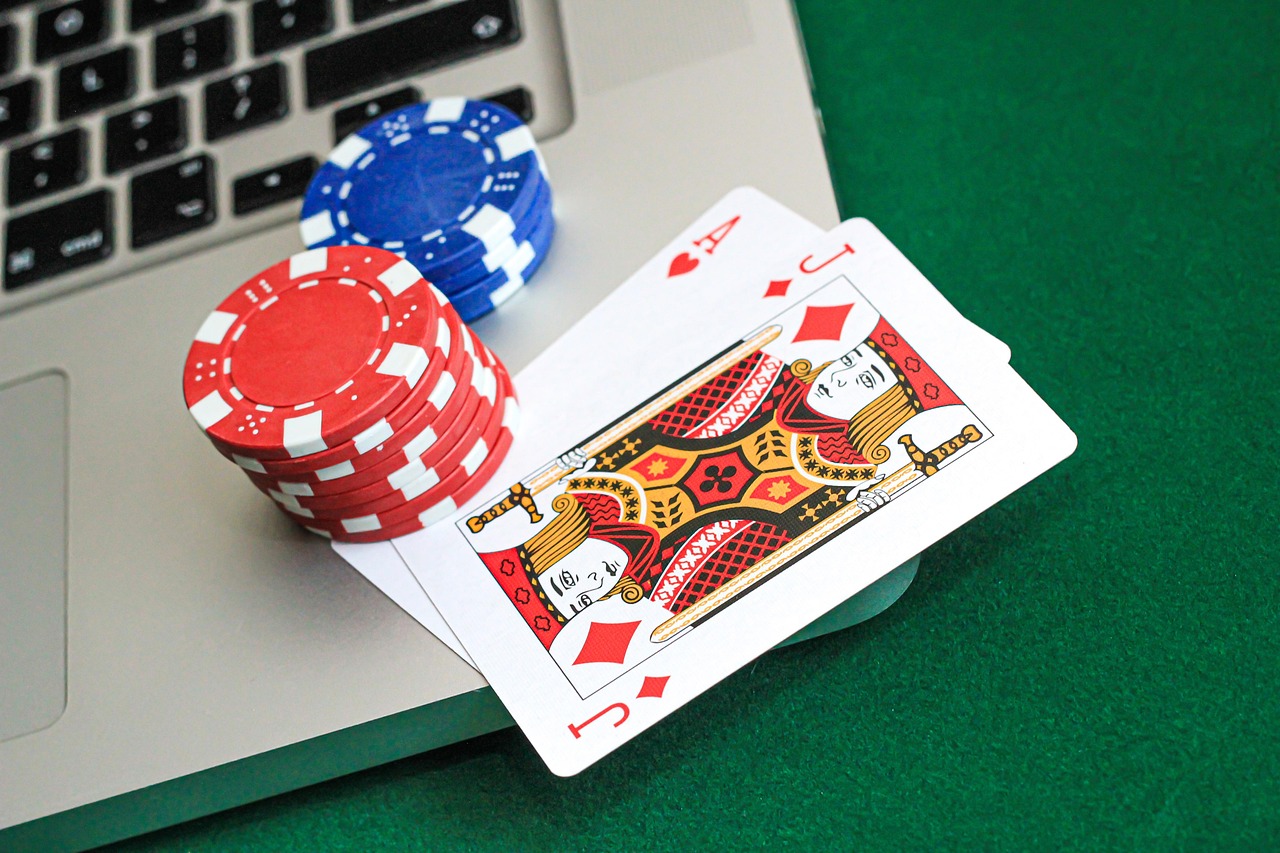
You sit down at a virtual blackjack table. The dealer's showing an ace, you've got a 16, and your bankroll is on the line. Do you hit or stand? That split-second decision separates players who treat iGaming like a business from those who treat it like a lottery ticket. Here's the truth: gambling isn't about luck—it's about math, psychology, and discipline. Whether you're spinning slots, bluffing at poker, or betting on football, the house always has an edge. Your job is to shrink that edge and capitalize on the moments when the odds tip in your favor.
I've spent a decade analyzing casino games, tracking betting markets, and watching ordinary players lose fortunes because they ignored basic principles. This isn't a sermon about quitting. It's a practical guide to playing smarter.
Walk into any casino, and you'll hear the same lie: "This machine is due." It's not. Slots use random number generators (RNGs) that spit out millions of outcomes per second. The machine doesn't remember your last spin any more than a coin remembers its last flip. But that doesn't mean all slots are created equal.
The key metric is RTP—return to player. A 96% RTP slot pays back 96 cents for every dollar wagered over millions of spins. The house keeps 4%. Compare that to a 90% RTP game, where the house keeps 10%. Over a thousand spins, that difference wipes out your bankroll twice as fast.
My rule: Never play a slot with an RTP below 94%. Never chase losses. And never, ever believe a game is "hot" or "cold." It's just a random number generator doing its job. You will find a helpful summary at สล็อตเว็บตรง.
Here's what separates poker from every other casino game: you're not playing against the house. You're playing against other humans. The house takes a rake—typically 5% of each pot up to a cap—but your edge comes from exploiting opponents' mistakes. That means poker is a skill game, and skill can be learned.
Start with position. Acting last gives you information. If you're on the button, you see what everyone does before you decide. That's why tight-aggressive players open 20% of hands from early position but 40% from the button. You're not playing cards; you're playing ranges.
Next, bankroll management. Professional cash game players never buy in for more than 5% of their total poker bankroll. If you have $1,000 dedicated to poker, your buy-in is $50. At micro-stakes ($0.01/$0.02 blinds), that's 2,500 big blinds—enough to survive variance. Most amateurs lose because they move up too fast after a hot streak.
Finally, hand reading. Not tells—that's Hollywood nonsense. Hand reading means reconstructing an opponent's range based on their actions. If a tight player raises from early position, then check-raises the flop, they have a set or two pair. If a loose player calls your three-bet, they could have any two suited cards. Watch betting patterns, not faces.
One concrete tip: Track your results. Use a free spreadsheet or a HUD (heads-up display) if you're online. After 10,000 hands, you'll know your true win rate. Most players are shocked to find they're break-even or losing—but that data is your starting point for improvement.
Sports betting isn't about picking winners. It's about finding value—when the odds offered are higher than the true probability of an outcome. The best bettors don't win 70% of their bets. They win 53% to 55% because they consistently bet when the price is wrong.
How do you find value? Start by understanding implied probability. A -110 line (standard for point spreads) implies a 52.4% chance. If you believe the true chance is 55%, you have an edge. But you need to calculate that true chance using data, not gut feeling.
Remember: The house edge on a -110 bet is 4.5%. That's lower than most slots but higher than blackjack with basic strategy. You need discipline to grind out profits over hundreds of bets.
Blackjack is the only casino game where a skilled player can gain a long-term edge. Not by counting cards like in the movies—that's illegal and impractical online. But by using basic strategy, a mathematically optimal way to play every hand.
Basic strategy reduces the house edge to 0.5% or less, depending on rule variations. For example: Always split aces and eights. Never split tens. Double down on 11 against a dealer's 6. These aren't opinions; they're derived from billions of simulated hands.
Online blackjack often uses continuous shuffling machines (CSMs), which eliminate card counting entirely. That's fine—you weren't going to count anyway. Focus on finding games with favorable rules: dealer stands on soft 17, double after split allowed, and late surrender offered. These rules can swing the edge by 0.5% in your favor.
You can be the best poker player or slots strategist in the world, but you'll go broke without bankroll management. Here's the framework I use:
Discipline is boring. But it's the difference between a hobby and a disaster.
iGaming isn't evil, and it isn't a get-rich-quick scheme. It's an entertainment product with a built-in cost—just like a movie ticket or a round of golf. The smartest players accept that cost, minimize it through knowledge, and never let a bad beat dictate their next move. Whether you're spinning slots at 96% RTP, bluffing a tight player off a pot, or betting a closing line that's moved 1.5 points, the game rewards preparation. So before you click 'spin' or 'call' or 'place bet' again, ask yourself: Are you playing the game, or is the game playing you?


We are not gonna make spamming
